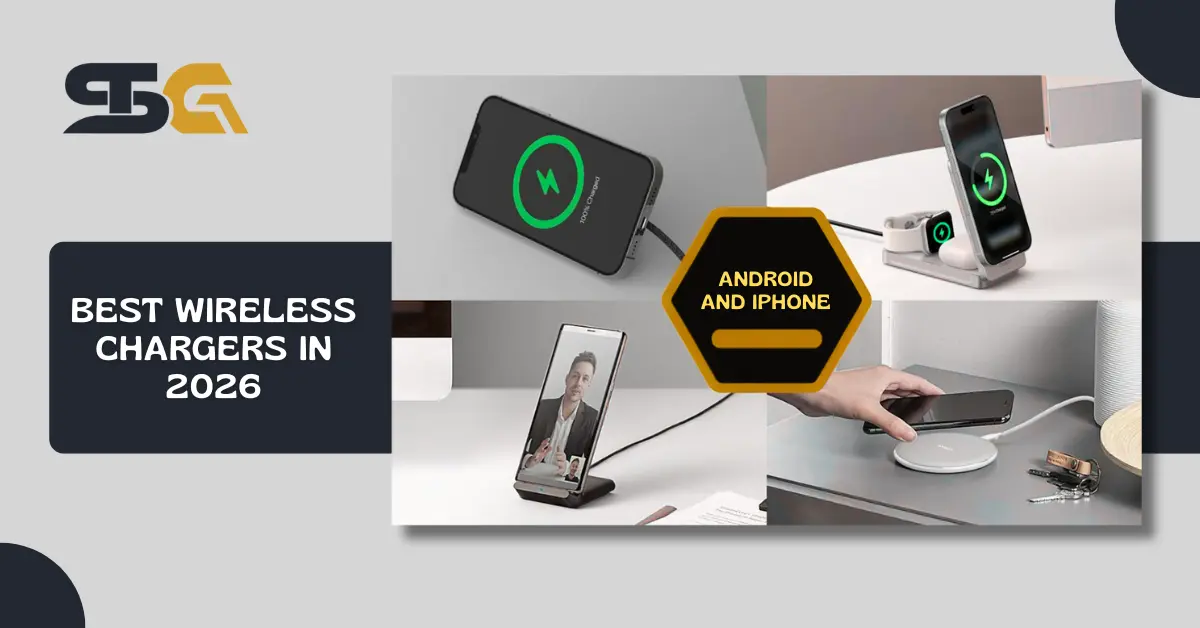
The hassle of dealing with chargers is over. Frayed and damaged charging cables are a thing of the past as wireless charging continues to become the standard. By 2026, many cables will be replaced by the best wireless chargers, designed with smarter power control, improved heat management, and universal standards that finally bridge the gap between Apple and Android devices.
In previous years, MagSafe was Apple’s proprietary charging solution, while Qi slabs were used for all other devices. With the increased adoption of the Qi2 standard, which is based on Apple’s magnetic technology and is therefore open for public use, these lines have blurred. One can now enjoy the same experience of fast and aligned magnetic charging on the newest Samsung Galaxy, Google Pixel, and Apple iPhone devices.
Flexible and functional wireless chargers allow users to protect their battery health. At Smartech Guru, we strive to help users find accessories that wireless chargers protect their battery health. We evaluate charging speeds, styles, and innovations.
What Makes a Wireless Charger the Best in 2026
Before purchasing, it is crucial to understand the wireless charging landscape. Though a specific wireless 2026 charger may be the most impressive in 2023, it may be incompatible or extremely slow two to three years from now. Leading wireless chargers in 2023 have the most current features.
The Rise of Qi2 Certification
One of the most noticeable shifts in the last two years is the Qi2 Certification. It is the first standard adopted by the WPC and is implementing MPP. It enables Android users to have the same charging experience as Apple users. Magsafe enhances the user experience because of its design integration. Magsafe provides unique alignment, which increases efficiency by reducing heat and energy loss. If a wireless charger is Qi2 certified, it ensures that a user receives a Magsafe-like charging experience.
Wattage and Speed
5W and 7.5W chargers should not be used anymore. A good charger for 2026 will be 15W. Some proprietary chargers like those from OnePlus and Xiaomi can go over 50W. A good 3rd party charger for 2026 can do 15W for iPhones and Androids.
Thermal Management
Heat is the enemy of battery longevity. The top-tier chargers now utilize active cooling (quiet internal fans) or advanced heatsink materials like ceramic or cryo-conductive gels to pull heat away from the phone.
Safety Protocols
A modern charger is constantly ‘talking’ to your phone. They look for the presence of foreign objects like coins that can cause burns and adjust the voltage to prevent that. Of the many essential mobile accessories, wireless chargers are the most important to consider for safety, as they can cause damage without certification, so be sure to look for a safety certification.
Best Wireless Charger Overall for Android and iPhone
For a wireless charger that can do it all, look for one that has universal compatibility and reliability. The best pick for 2026 isn’t always the one with the highest wattage, but the one that gives you consistent power every time you place your phone on it.
Performance and Reliability
The best-case scenario for all-around charger performance is that it meets the Qi2 standard. That way, when you place an iPhone 17 or a Pixel 10 on the pad, it locks into a charging position and starts 15W fast charging. We prefer chargers that come with a quality GaN (Gallium Nitride) wall adapter. GaN adapters are more compact, more efficient and generate less heat than older silicon-based bricks, so that the pad will get reliable power.
Design and Durability
The best chargers in this regard are upholding a more premium design ethos. Rather than the lightweight, slippery, and cheap plastic finish, the best chargers now offer a zinc alloy or weighted rubber charger and a soft-touch silicone or fabric covering so that they are less likely to scratch the phone’s glass back. This will also ensure that chargers do not slide around when you grab your phone with one hand.
Real-World Usability
If you are going to get a charger that you use every day, the design of the indicator lights is something you should pay attention to. If the charger lights are too bright, it makes it hard to sleep. This is why the best chargers are the ones that have lights that dim automatically or turn off after a connection is made. How good would a charger be if you needed to tape over the lights because they are so bright?
Best MagSafe and Qi2 Wireless Chargers for Faster Charging
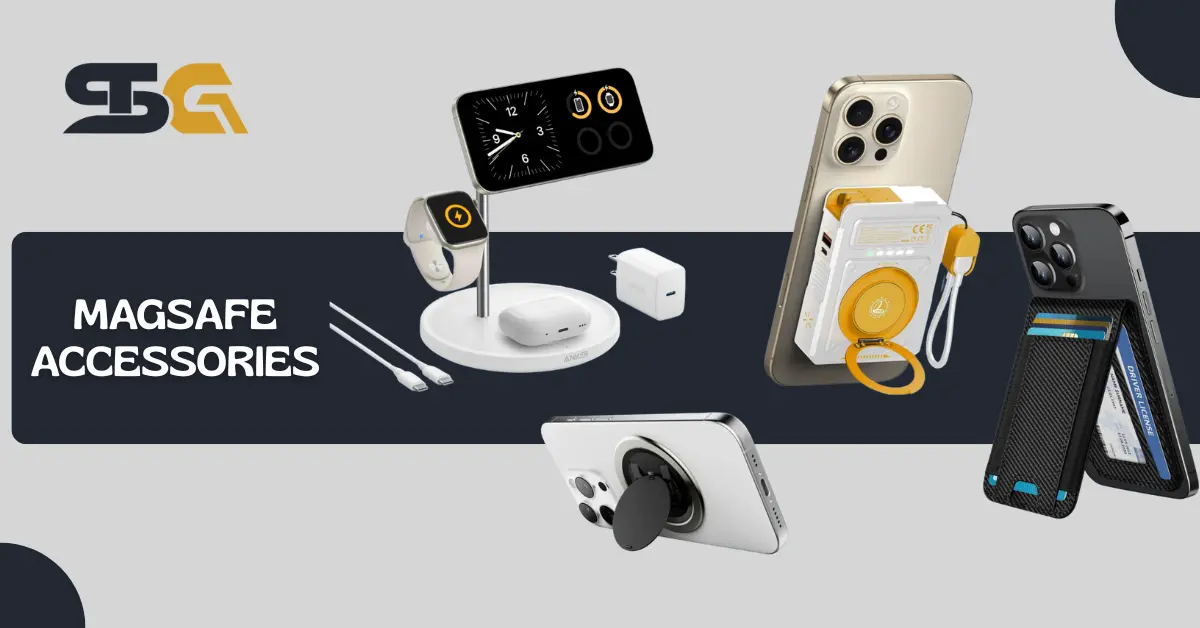
For speed enthusiasts, magnetic alignment is the name of the game. While MagSafe started as Apple’s branding, the technology behind it has evolved rapidly. In fact, MagSafe accessories 2026 now represent a broader ecosystem of magnetic wireless chargers, mounts, and power solutions that work across both Apple and Android devices, delivering faster and more reliable charging.
This shift toward magnetic charging is part of broader technology trends 2025, where faster power delivery, universal standards, and smarter accessories are reshaping how users interact with their devices.
Why Magnets Matter
Wireless charging relies on induction. Power is transmitted between two copper coils. When these coils are perfectly stacked, energy transfer is high, and heat is low. When they are offset, the charger has to work harder to push power across the gap, generating waste heat. Magnetic chargers eliminate user error. You cannot place the phone “wrong.”
The Android Advantage
In 2026, major Android manufacturers will have fully embraced magnetic arrays in their device backs. This means Android users can finally access the vast ecosystem of magnetic mounts, wallets, and high-speed chargers that were previously exclusive to Apple users.
Efficiency Boosts
Because the alignment is perfect, these chargers can sustain high wattage for extended periods. Non-magnetic pads often throttle speeds after 10 minutes because the heat builds up. Magnetic charging reflects how emerging technologies continue to improve everyday smartphone usage, ensuring you walk away with a 50% charge in the time it used to take to get 20%.
Best Wireless Charging Stands for Desk and Bedside Use
There is quite a variety available for wireless charging stands that can be used for either a desk or bedside. Flat designs can be better for minimalistic designs. A charging stand can offer users a more functional approach, as they can see notifications or use the bright display.
The Work-From-Home Essential
For desk setups, a wireless charging stand that has a slight angle is better. This way, you can easily unlock your device with FaceID and see the notifications coming in without having to pick the device up. This makes your workflow more seamless. The best stand for 2026 is having adjustable hinges, so you can tilt at a 90-degree angle and have the device flat like a wireless charging pad.
Smart Display Integration
iOS (Standby Mode) and Android (Hub Mode) both have these smart display capabilities. Your device turns into a smart clock or a smart photo frame when charging horizontally. This also makes a sturdy stand into a bedside clock, kitchen timer, or bedside smart box. While charging, the stand can control your smart home devices, like your lights or thermostat.
With phones staying upright and powered throughout the day, users can comfortably access features like ChatGPT voice for hands-free queries, reminders, and quick assistance without worrying about battery drain.
Stability
When choosing a stand, look for “stickiness” on the bottom. Micro-suction tape or heavy rubber feet are necessary so that tapping your screen doesn’t knock the charger over.
Best Multi-Device Wireless Charging Stations
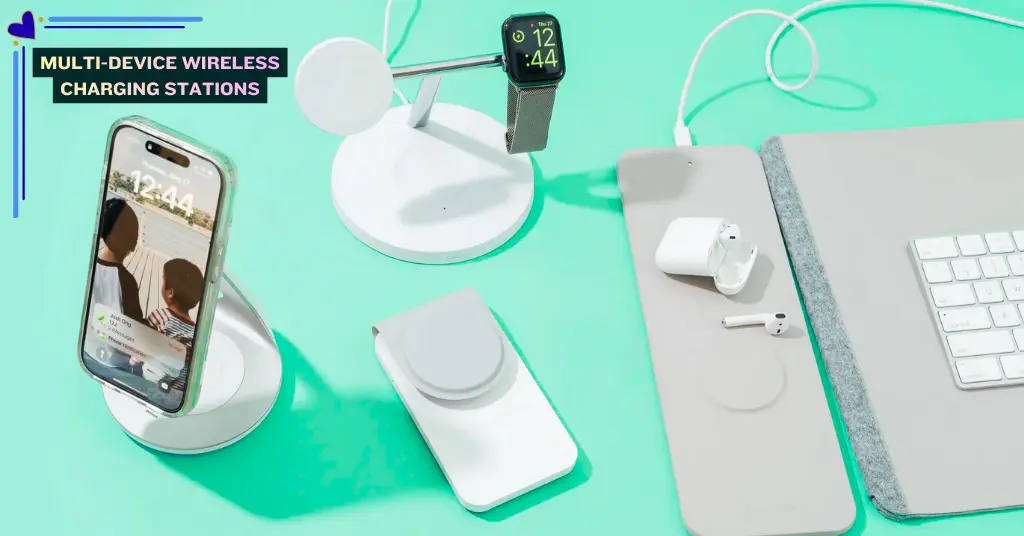
For the tech enthusiast with a smartwatch, earbuds, and a phone, a single charging pad creates a bottleneck. Multi-device stations clean up cable clutter and ensure everything is ready to go in the morning.
3-in-1 Solutions
The best type of multi-device charger is are 3-in-1 charger. These typically have a raised, adjustable, and movable magnetic holder for the phone, a small cutout for the earbuds, and a separate disc for the smartwatch. The best chargers of 2026 will have replaceable smartwatch discs. These will allow you to customize and exchange Apple Watch discs for Galaxy Watch or Pixel Watch discs. This type of charger will keep you from being obsolete as you switch to a different brand of phone.
Power Distribution
Low-quality multi-device chargers do a poor job of distributing power. If you plug in a smartwatch and earbuds, the phone’s charging ability is reduced to a crawl. If it’s 40W+, then the most advanced multi-device chargers do have their own power supplies and will ensure that the phone maintains 15W charging, regardless of whether the watch and earbuds are also drawing power.
Travel Considerations
It is now possible for 3-in-1 stations to fold flat, a great advantage for travelers who want to avoid carrying three individual cables. However, frequent users may want to invest in a solar power bank to complement the 3-in-1 station for charging off the grid. This is especially useful for places where a wall outlet is not available.
Best Budget Wireless Chargers That Still Perform Well
You don’t need to spend $100 to get a safe charge. The budget category has improved drastically, offering solid performance for a fraction of the flagship price.
What You Give Up
In the spirit of the budget wireless chargers, they provide 7.5W output and a speed tier of 10W, rather than the whole wide range of 15W offered on the Qi2. The cheaper chargers are usually designed with lower-end materials, using light plastic instead of the premium heavy materials, which means they provide basic wall chargers, leaving you to use your own USB-C adapter.
Reliable Options
There is an excellent assortment of budget wireless chargers from reputable brands. When you find a budget wireless charger, be sure to look for basic safety certifications that prove it has reliable overcurrent protection and reliable foreign object detection safety protections. Budget wireless chargers are great for guest rooms, or other places where you need a wireless charger but charging speed is not a top priority.
The “No-Name” Warning
Any apparatus that charges your device and does not have a brand on it is not a legitimate product. They are made cheaply and do not have temperature control to protect your phone and charge it safely. If you buy brandless chargers at a gas station or from cheap online listings, you are putting your phone’s internal battery at risk and can start a fire. Saving 20 bucks is not worth it.\n
Wireless Charging Pads vs Stands: Which One Should You Choose
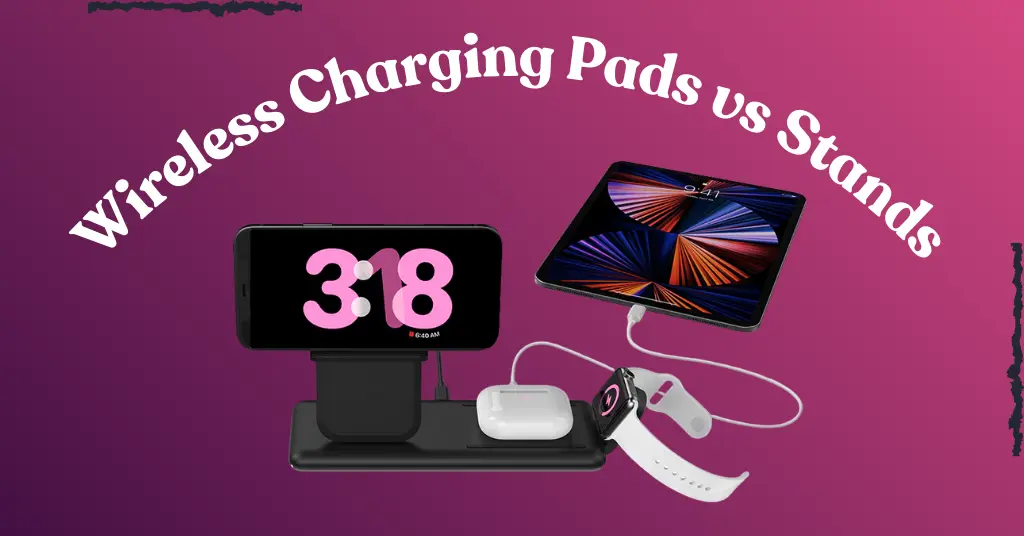
The debate between pads and stands comes down to lifestyle and placement.
The Case for Pads
- Low Profile: Pads disappear into the decor. They are less obtrusive on a nightstand.
- Grab-and-Go: It is slightly easier to pick a phone up from a flat surface than to disengage it from a magnetic stand.
- Versatility: It is easier to charge odd-shaped items, like two pairs of earbuds or an older phone, on a flat pad.
The Case for Stands
- Interaction: As mentioned, stands are better if you need to see the screen.
- Alignment: Non-magnetic stands usually have a “lip” that forces the phone into the correct charging position, reducing the chance you wake up to a dead battery because you placed the phone slightly off-center.
Footprint: Stands often take up less vertical desk space (depth) than a large flat pad.
FAQs
1. What is the best wireless charger for Android and iPhone in 2026
The best option is a Qi2-certified wireless charger that supports fast charging and works reliably across both platforms.
2. Best wireless charger 3 in 1
A 3-in-1 wireless charger is ideal for users who want to charge a phone, earbuds, and smartwatch simultaneously from one station.
3. Best wireless charger for multiple devices
Multi-device wireless chargers are best for households or workspaces where more than one device needs charging at the same time.
4. Are Qi2 wireless chargers better than standard Qi chargers
Qi2 chargers offer better alignment, faster charging speeds, and improved efficiency compared to older Qi models.
5. Do wireless chargers damage phone batteries
Certified wireless chargers are designed with heat control and safety standards that protect long-term battery health.
6. Is MagSafe only for iPhones
While MagSafe was introduced by Apple, Qi2 magnetic chargers now also support many modern Android devices.
Conclusion
The collision of standards and speed is the defining feature of the wireless charging landscape for 2026. Thanks to the Qi2, the market has become streamlined; now you can enjoy fast, efficient, and magnetic charging regardless of whether you are Team Android or Team iPhone.
When charging your devices, focus on the advertising level of the charger and select one that is safe and certified to work with your devices. Please make sure to use a charger with efficient thermal management to protect the longevity of your devices. Whether you choose a sophisticated three-in-one charging station for your bedside or a pad that is made to be rugged and portable for your travels, the perfect charger will simplify the digital lifestyle you lead by keeping your devices powered.